

Achieving a professional-grade finish is the hallmark of any high-quality manufacturing or woodworking project. Whether you are prepping a piece of furniture for varnish or smoothing out a complex metal component, the choice of abrasive media is paramount. A common dilemma for industrial operators and DIY enthusiasts alike is choosing between traditional sandpaper and sanding sponges. While both are essential, they serve different purposes and offer distinct mechanical advantages.
In this guide, we break down the performance characteristics of these tools to help you decide when to stick with traditional sheets and when to upgrade to an abrasive sanding sponge block. By understanding the nuances of your abrasive media, you can significantly improve your surface quality and operational efficiency.
Traditional sandpaper remains the industry standard for large, flat surface preparation. It is a highly effective, cost-efficient abrasive that comes in a vast array of grit sizes. The primary benefit of sandpaper lies in its rigidity and its ability to be used with mechanical sanders, which facilitates rapid material removal.
However, when working with sandpaper and sanding sponges, it is important to recognize the limitations of paper-backed products. Traditional sandpaper often struggles with complex geometries; when pressed against a curved surface, the rigid backing can create uneven pressure points, leading to inconsistent scratch patterns. Furthermore, traditional sandpaper is typically intended for a single or limited use, whereas modern alternatives offer more durability for repetitive tasks.
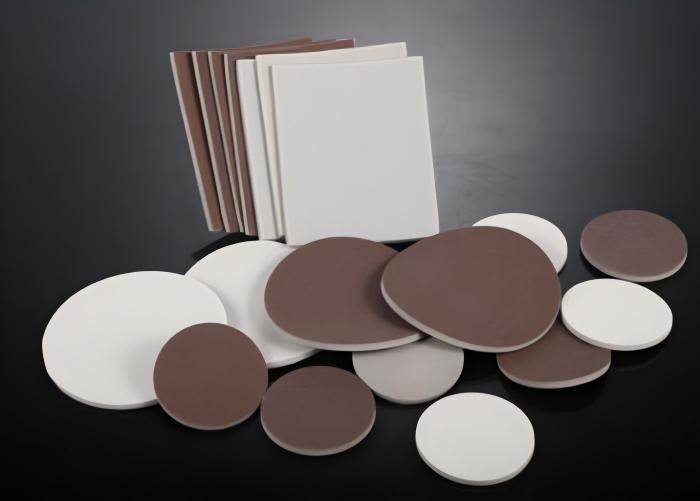
The abrasive sanding sponge block represents a significant evolution in finishing technology. Unlike traditional paper-backed abrasives that apply pressure in only two dimensions, the foam-based construction of an abrasive sanding sponge block allows for pressure distribution in three dimensions.
By using a flexible foam carrier, the grains are held in place by a flexible resin, which allows the contact pressure to dissipate evenly across the surface. This ensures that the abrasive grit does not cut too deeply into the material, effectively preventing the "sanding through" of edges that is a frequent failure point when using traditional sandpaper. For manufacturers looking for premium surface solutions, understanding this mechanical difference is key to reducing waste and rework.
To make an informed decision for your production line, it is essential to weigh the specific mechanical interactions of each tool against your workpiece requirements. Traditional sandpaper excels in high-speed material removal on planar surfaces; however, it lacks the "compliance" necessary for intricate work. In contrast, the abrasive sanding sponge block is engineered to absorb slight variations in surface contour, which mitigates the risk of gouging.
| Feature | Traditional Sandpaper | Abrasive Sanding Sponge Block |
|---|---|---|
| Surface Adaptability | Best for flat, wide surfaces | Excellent for contours and grooves |
| Pressure Distribution | Localized (can cause gouging) | Three-dimensional (even pressure) |
| Durability | Limited (tears easily) | High (washable and reusable) |
| Clogging Resistance | Moderate | High (due to dust release) |
Choosing the right tool isn't just about preference—it’s about matching the tool to the task at hand. While sandpaper provides the aggressive cut needed to level a rough-sawn board, the abrasive sanding sponge block is the superior choice for trim, grooves, and complex contours where manual control is required. Its ability to be folded without creating permanent creases allows for a consistent sanding pattern that maintains the integrity of the workpiece. By understanding these differences, operators can optimize their workflow, ensuring that the heavy lifting is done by rigid sheets, while the intricate, final-pass finishing is handled by the adaptive nature of foam-backed abrasives.
In professional manufacturing, downtime caused by changing tools or reworking flawed pieces is costly. The abrasive sanding sponge block has become a staple in industrial paint prep because it resists heat build-up and is designed for both wet and dry applications.
When comparing sandpaper and sanding sponges, industrial operators often find that the flexible backing of the sponge prevents the "pressure spots" caused by fingertips during manual sanding. This uniform pressure distribution is critical when prepping delicate surfaces like musical instruments, wood floors, or automotive trim. By integrating the right abrasive tool, factories can ensure that every worker—regardless of skill level—achieves a professional, homogeneous surface finish.
If your facility is currently evaluating its supply chain, you can browse our extensive abrasive product range to find options that minimize clogging and maximize the life-cycle of your consumables.
At Zibo Sankyo Rikagaku Abrasives, we specialize in providing wholesale solutions that cater to the unique requirements of modern manufacturing. We understand that whether you are purchasing bulk sandpaper and sanding sponges or sourcing a specialized abrasive sanding sponge block, consistency is the bridge between a good product and a great brand.
Our manufacturing processes are engineered to offer excellent grain retention and dust-clearing capabilities, which significantly reduces the frequency of product changes. We pride ourselves on being more than just a supplier; we are your technical partner in achieving the perfect surface. Our team is dedicated to providing high-quality solutions that withstand the rigors of industrial use, ensuring that your team spends less time cleaning up dust and more time delivering exceptional results. You can reach out to our team to know more about our high-quality surface solutions.
The choice between traditional sandpaper and an abrasive sanding sponge block ultimately depends on the geometry of your workpiece and your desired finish. While sandpaper remains a workhorse for flat, broad-stroke material removal, the abrasive sanding sponge block offers unparalleled control, durability, and uniformity for complex contours and delicate final prep. By selecting the right abrasive technology—and partnering with a manufacturer that prioritizes consistency and technical support—you can elevate the quality of your finishing projects while optimizing your operational costs.
1. Can an abrasive sanding sponge block be used for wet sanding?
Yes, high-quality sponge blocks are designed for both wet and dry use and can be washed and reused, making them highly versatile for different environments.
2. Why does sandpaper tend to clog more than a sanding sponge?
Traditional sandpaper has a rigid backing that traps dust. In contrast, the soft carrier and flexible resin of a sanding sponge allow dust to be continuously removed from between the granules during the sanding process.
3. Which is better for woodworking trim: sandpaper or a sponge block?
A sponge block is generally superior for trim and profiled surfaces because its conformability allows it to navigate tight corners and depressions, such as door handle areas, without damaging the edges.
4. How does the Zibo Sankyo Rikagaku abrasive sanding sponge block prevent edge damage?
By distributing pressure in three dimensions rather than two, the sponge block prevents excessive localized pressure, which stops the abrasive from cutting too deeply into corners or edges.

 English
 中文
中文
 한국어
한국어 français
 Deutsch
 Español
 italiano
 русский
 português
 العربية
 tiếng việt
 Polska