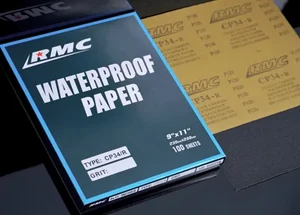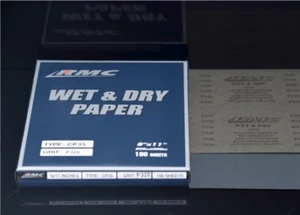

Zibo Sankyo Rikagaku offers waterproof abrasive paper with silicon carbide and aluminum oxide grains bonded to water-resistant paper backings. Our range includes silicon carbide waterproof paper for paint preparation and finishing, alongside aluminum oxide options for selected metal and composite sanding applications. Abrasive sandpaper has fine scratches and excellent water and grease resistance. It is the best choice for water grinding and oil grinding.
Choose from kraft- and latex-paper backings according to the workpiece, sanding method and finish required. Our waterproof abrasive latex paper options include grades for contour sanding and fine finishing. Confirm the available grit, dimensions and wet-or-dry suitability of the selected model before ordering.
The following comparison covers selected models, rather than the entire range. Compare latex abrasive paper with the C34P abrasive kraft paper option by backing, available grades and application. Backing weight alone does not establish which product will perform best in your process.
| Model | Abrasive Grain | Paper Backing | Listed Grit Range | Sheet Dimensions | Selection Focus |
|---|---|---|---|---|---|
| C34P | Silicon carbide | C-weight kraft paper | 60–1000 | [Standard sizes to confirm] | Automotive coating preparation and general finishing; wet and dry use. |
| C35P | Silicon carbide | C-weight latex paper | 60–2500 | [Standard sizes to confirm] | Flexible backing for curves, contours and irregular surfaces. |
| CP36 | [Abrasive grain to confirm] | C-weight latex paper | 60–2000 | 230 × 280 mm; 230 × 140 mm | Listed for automotive repair, metal and composite sanding; confirm the abrasive specification before selection. |
| CP38 | Silicon carbide | C-weight latex paper | [Range to confirm: specification table lists 240–5000] | [Standard sizes to confirm] | Fine sanding of paint, primer, gelcoat and metal. |
| AP37 | Aluminum oxide | C-weight latex paper | 60–2000 | 230 × 280 mm; 230 × 140 mm | Wet-and-dry sanding of metal molds and composite workpieces. |
Ranges summarize listed grades, not every intermediate grit number. Confirm the individual grade, grit designation and size for your order. Evaluate the selected product under your working conditions.
Silicon carbide grit paper is widely used in the automotive, fumiture, leather, household, electrical appliances 'shell andmechanical parts by water grinding and oil grinding and polishing. And itis the best choice for the painting and polishing ofthe high-grade fumiture, woodwork and the precision polishing of jewels, handicrafts, toys, and lacquerware. You can find the perfect solution for grinding and polishing with our silicon carbide abrasive paper.
| Application | Models to Consider | Why Consider Them? | Information Needed for Selection |
|---|---|---|---|
| Automotive paint and primer preparation | C34P / C35P | Both list automotive coating applications. C35P is an option to evaluate where the abrasive needs to follow contours. | Coating type, surface condition, sanding stage, grit and wet-or-dry method. |
| Curved or profiled surfaces | C35P | The latex-paper backing is described as flexible and adaptable to shaped surfaces. | Workpiece shape, hand or block sanding method and target finish. |
| Fine paint or gelcoat sanding before polishing | CP38 | Its published applications include fine sanding and paint finishing. | Coating condition, required fine grade, polishing process and acceptable scratch pattern. |
| Metal molds, carbon-fibre or fibreglass workpieces | AP37; CP36 after specification confirmation | These materials appear among their published applications. Select by the exact substrate and process rather than industry name alone. | Substrate, coating or resin system, sanding method, wet-use compatibility and finishing target. |
For a replacement recommendation, include your current abrasive code, grit sequence and the problem you want to solve. A trial should confirm suitability before you change a production process or place a bulk order.
Zibo Sankyo Rikagaku brand waterproof abrasive paper has excellent water resistance and cutting efficiency. The flexible abrasive paper is not easily broken while grinding which makes sure a longer life. Zibo Sankyo Rikagaku brand waterproof abrasive paper can meet the grinding requirements of various industries with different grit numbers.
We are a professional abrasive paper manufacturer. If you want to buy abrasive products, we can be your reliable sandpaper supplier. Please make an enquiry through our website.
Less Clogging: Using silicon carbide emery paper with water helps to keep the abrasive particles from clogging the paper, which can reduce the effectiveness of the sandpaper.
Longer Life: Waterproof abrasive paper typically lasts longer than traditional sandpaper because the water helps to cool the abrasive particles, which reduces wear and tear.
Better Finish: Using waterproof abrasive paper with water can produce a smoother and more uniform finish, which is especially important when working with delicate surfaces.
Waterproof silicon carbide abrasive paper is available in a range of grits, which refers to the coarseness or fineness of the abrasive particles on the paper. The higher the number, the finer the grit. Some common grits of waterproof abrasive paper include:
60-80 grit: This is a coarse grit that is typically used for heavy sanding or removing paint or rust from metal surfaces.
120-220 grit: This is a medium grit that is often used for smoothing out rough surfaces or preparing surfaces for finishing.
320-600 grit: This is a fine grit that is used for final sanding and polishing.
Use Water: Always use water with waterproof abrasive paper to help keep the paper from clogging and to extend the life of the paper.
Start with a Coarse Grit: If you are working on a surface that is heavily damaged or rough, start with a coarse grit and work your way up to a finer grit.
Keep the Paper Wet: Make sure to keep the paper wet while sanding, as this will help to prevent the paper from wearing out too quickly.
Tell us what you are sanding and what you need to improve. Include the model or current product code, grit, size, sanding method, quantity and delivery country. If the model or grit is undecided, describe the application and required finish instead.

 English
 中文
 한국어
 français
 Deutsch
 Español
 italiano
 русский
 português
 العربية
 tiếng việt
 Polska