

Achieving a consistent surface finish requires more than the right sanding technique. The abrasive disc itself plays a major role in determining how efficiently material is removed, how evenly the surface is processed, and how long the abrasive can maintain its performance during continuous use.
Velcro abrasive discs are engineered with multiple components that work together to deliver reliable sanding results. From abrasive grain structure and backing material selection to resin bonding and hook and loop attachment design, every element influences the disc’s cutting ability, flexibility, and durability.
In professional applications such as automotive refinishing, furniture production, metal finishing, and industrial surface preparation, high-quality velcro sandpaper discs help users achieve stable performance across different sanding stages. Understanding the factors behind abrasive disc construction allows manufacturers and end users to select products that better match their processing requirements.
As an abrasive manufacturer, RIKEN Abrasives focuses on the relationship between material technology and real-world sanding performance. By optimizing abrasive structures and manufacturing processes, RIKEN develops abrasive disc solutions designed for consistent results, improved efficiency, and long-term reliability.
The abrasive grain is the primary cutting component of velcro abrasive discs. Its type, shape, hardness, and distribution directly influence how effectively the disc removes material and how well it maintains cutting performance throughout the sanding process.
Different sanding applications require different abrasive grain characteristics. For general-purpose surface preparation, aluminum oxide grains are commonly used because they provide a balanced combination of cutting efficiency and durability. For applications requiring faster material removal or more demanding surface treatment, abrasive grains with specific performance characteristics may be selected.
The sharpness and structure of abrasive grains determine how they interact with the workpiece. A sharp grain can provide efficient cutting action, while a durable grain structure helps maintain performance during longer sanding operations. This balance is especially important for professional users who need both productivity and consistent finishing quality.
Grain distribution is another important factor affecting velcro sandpaper discs. A uniform abrasive coating helps ensure stable contact with the surface, reducing uneven wear and improving overall sanding consistency.
When selecting abrasive discs, users should consider the material being processed, the required surface finish, and the sanding conditions. RIKEN Abrasives develops abrasive solutions with carefully selected grain structures to support different industrial applications and performance requirements.
The backing material provides the foundation of an abrasive disc and determines its flexibility, strength, and adaptability during use. A well-designed backing allows velcro abrasive discs to maintain stable performance while working on different surface shapes and materials.
In applications involving curved surfaces or irregular components, backing flexibility is essential. A flexible abrasive disc can better follow surface contours, helping operators achieve a more uniform finish and reducing the possibility of uneven sanding marks.
However, flexibility alone is not enough. The backing must also provide sufficient strength to withstand sanding pressure and mechanical stress. If the backing is too weak, the disc may tear, deform, or lose efficiency during operation.
Different backing materials are selected according to application requirements. Paper backings are often suitable for fine finishing where flexibility is important, while stronger backing options may be preferred for industrial applications requiring higher durability.
| Performance Factor | High-Quality Velcro Abrasive Discs | Standard Abrasive Discs |
|---|---|---|
| Abrasive Grain | Uniform grain distribution with stable cutting performance | Less consistent cutting and faster performance reduction |
| Backing Material | Balanced flexibility, strength, and surface adaptability | Higher risk of deformation or reduced durability |
| Bonding Technology | Strong grain retention and controlled abrasive wear | Higher possibility of premature grain loss |
| Attachment System | Secure hook and loop connection for efficient replacement | Potential movement during sanding operations |
The bonding system determines how securely abrasive grains remain attached to the disc surface. In velcro abrasive discs, resin bonding technology has a direct influence on durability, cutting consistency, and overall sanding performance.
During sanding, abrasive grains experience continuous friction and pressure. A reliable bonding system helps maintain grain retention while allowing worn grains to gradually expose new cutting edges. This process helps extend abrasive life and maintain stable cutting performance.
The balance of resin hardness is critical. If the bond is too weak, abrasive grains may detach prematurely, reducing the useful life of the disc. If the bond is excessively strong, worn grains may not release effectively, which can reduce cutting efficiency.
Professional abrasive manufacturers carefully control resin formulation, coating processes, and curing conditions to achieve the right balance between durability and performance.
For industrial users, consistent bonding quality is particularly important because unstable abrasive performance can lead to variations in surface finish and production efficiency. RIKEN Abrasives applies controlled manufacturing processes to help ensure reliable abrasive performance across different applications.
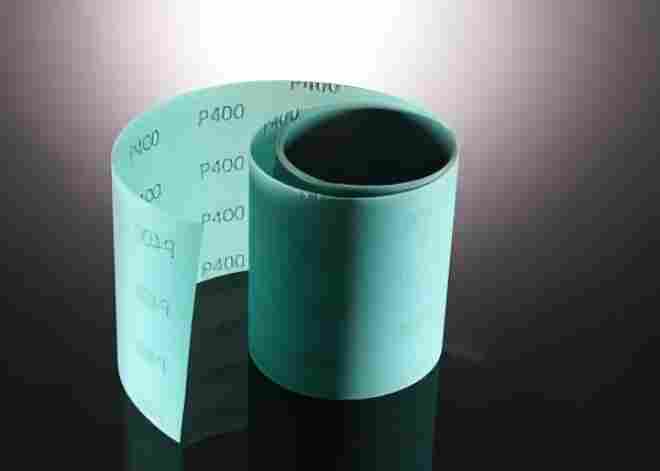
The hook and loop backing system is one of the key features that defines velcro abrasive discs. This attachment method allows operators to quickly replace discs while maintaining secure positioning during sanding operations.
In professional environments, sanding often requires multiple grit changes during different processing stages. The convenience of hook and loop systems allows users to switch abrasive discs efficiently, reducing downtime and improving workflow flexibility.
A high-quality attachment system needs to provide both strong holding force and easy removal. If the connection is unstable, the disc may shift during sanding, affecting surface consistency and increasing the possibility of uneven results.
The quality of the hook and loop backing also affects the overall performance of velcro sandpaper discs. A reliable system ensures better contact between the abrasive and the workpiece, helping users achieve more predictable sanding results.
Grit selection is another important factor influencing abrasive disc performance. The correct grit size allows users to achieve the desired balance between material removal speed and surface refinement.
Coarse grits are generally selected for aggressive sanding tasks such as removing old coatings, smoothing rough surfaces, or correcting surface defects. Medium grits are commonly used for general preparation, while fine grits are preferred for finishing and polishing preparation.
Besides grit size, coating density also affects sanding performance. A properly controlled abrasive coating ensures that grains are evenly distributed across the disc surface, providing more consistent cutting action.
| Grit Type | Main Function | Typical Applications |
|---|---|---|
| Coarse Grit | Fast material removal | Coating removal, rough preparation, defect correction |
| Medium Grit | Surface leveling and preparation | General sanding and intermediate processing |
| Fine Grit | Surface refinement | Finishing, polishing preparation, appearance improvement |
Selecting the right grit sequence helps reduce unnecessary sanding steps and improves overall processing efficiency. RIKEN’s abrasive product solutions include different abrasive specifications designed for various surface preparation and finishing applications.
The final quality of velcro abrasive discs depends not only on individual materials but also on manufacturing accuracy and process control. Even small differences in abrasive coating, bonding strength, or backing treatment can influence sanding performance.
Professional abrasive production requires strict quality control throughout every manufacturing stage. Important factors include consistent abrasive grain distribution, accurate resin application, stable curing conditions, and reliable hook and loop attachment performance.
For companies using abrasive discs in high-volume production environments, consistency is essential. Stable abrasive quality helps reduce process variation, improve efficiency, and maintain predictable finishing results.
RIKEN Abrasives combines abrasive technology with manufacturing experience to develop products that meet different industrial requirements. Through careful material selection and controlled production processes, RIKEN supports customers seeking reliable abrasive solutions.
For customized abrasive requirements, special application recommendations, or bulk purchasing needs, customers can contact RIKEN’s abrasive specialists to discuss suitable solutions based on their working conditions.
The performance and durability of high-quality velcro abrasive discs are determined by the combined effect of abrasive grains, backing materials, resin bonding technology, hook and loop systems, grit selection, and manufacturing quality control.
Abrasive discs with optimized construction can provide more stable cutting performance, longer service life, and better surface finishing results. For professional users, choosing suitable velcro sandpaper discs according to material type, equipment conditions, and finishing requirements is essential for improving sanding efficiency.
With professional abrasive manufacturing experience, RIKEN Abrasives develops abrasive disc solutions designed for different industries and applications. By combining material expertise with precise manufacturing control, RIKEN helps customers achieve consistent and reliable sanding performance.
Velcro abrasive discs are used for sanding, surface preparation, finishing, and polishing applications in industries such as automotive, woodworking, and metal processing.
The durability of velcro abrasive discs depends on abrasive grain quality, backing strength, resin bonding technology, and manufacturing consistency.
The backing material affects flexibility, strength, and surface adaptability, helping the disc perform effectively on different materials and shapes.
The correct grit depends on the application. Coarser grits are used for material removal, while finer grits are used for surface refinement and finishing.
Yes. Velcro abrasive discs can be used for metal preparation, coating removal, weld finishing, and surface refinement when the correct abrasive specification is selected.
Using the correct grit, applying proper sanding pressure, and selecting abrasive discs designed for the specific material can help extend service life and improve sanding efficiency.

 English
 中文
中文
 한국어
한국어 français
 Deutsch
 Español
 italiano
 русский
 português
 العربية
 tiếng việt
 Polska