

Wet sanding is often used when surface quality, consistency, and finishing control are more important than aggressive material removal. Compared with traditional dry sanding, this process uses water or other liquids to support the abrasive action, helping reduce friction, remove sanding residue, and improve the overall surface condition.
The performance of this process depends heavily on the abrasive material being used. Waterproof sandpaper is specifically designed to maintain its strength and cutting ability in wet environments, making it suitable for applications where standard abrasive paper may lose performance or deteriorate during use.
From automotive paint refinement to industrial component finishing, waterproof sandpaper helps professionals achieve smoother transitions, cleaner surfaces, and more consistent results. Selecting the appropriate water paper grit is also essential, as different grit levels determine the balance between material removal speed and final surface smoothness.
RIKEN Abrasives develops waterproof abrasive paper solutions for various finishing applications, combining suitable abrasive grains, strong bonding systems, and durable backing materials to support reliable sanding performance in demanding working environments.
The performance of waterproof sandpaper is closely related to its material structure. Unlike conventional abrasive paper designed mainly for dry sanding, waterproof abrasive paper is manufactured to withstand repeated contact with water while maintaining its flexibility and abrasive performance.
A typical waterproof abrasive paper consists of abrasive grains, bonding layers, and a water-resistant backing. The abrasive grains provide the cutting action needed to remove surface imperfections, while the bonding system keeps the grains securely attached during sanding. The backing material provides support and allows the abrasive to maintain its shape during wet processing.
One of the main advantages of waterproof sandpaper is its ability to perform consistently in wet sanding conditions. Water helps carry away sanding particles and reduces the accumulation of debris between abrasive grains. This reduces clogging and allows the abrasive surface to continue cutting effectively.
Wet sanding also helps control heat generation during operation. When finishing painted surfaces, plastics, or delicate materials, excessive heat can affect surface quality. Using waterproof abrasive paper with proper lubrication helps create a more controlled sanding process.
For professional users, abrasive structure is an important consideration. Different applications require different combinations of grain type, backing flexibility, and bonding strength. RIKEN Abrasives develops abrasive paper products based on these factors to meet different surface finishing requirements.
Fine finishing requires more precision than simple material removal. When preparing a surface for polishing, painting, or coating, the objective is usually to remove small imperfections while maintaining a consistent and uniform appearance.
Waterproof sandpaper is commonly selected for these applications because wet sanding provides better control over surface refinement. The use of water reduces friction between the abrasive and the workpiece, allowing operators to achieve smoother results with fewer visible sanding marks.
In automotive refinishing, for example, technicians often use waterproof abrasive paper after applying paint or clear coatings. The sanding process helps correct minor surface defects and prepares the coating for polishing, improving the final visual quality of the vehicle surface.
The same principle applies to industrial finishing. Components that require a clean appearance or precise surface condition often benefit from controlled wet sanding. Compared with aggressive dry sanding methods, waterproof sandpaper allows operators to refine surfaces more gradually.
The selection of water paper grit directly affects the final result. Lower grit abrasives provide stronger cutting performance for removing defects, while higher grit options are selected for smoothing and preparing surfaces before polishing or final treatment.
| Comparison Item | Waterproof Sandpaper | Regular Dry Sandpaper |
|---|---|---|
| Main Working Method | Wet sanding with water or liquid lubrication | Dry sanding without liquid assistance |
| Primary Advantage | Better surface control and reduced clogging | Simple operation and general-purpose sanding |
| Typical Applications | Automotive finishing, polishing preparation, precision surface treatment | General sanding, rough preparation, material shaping |
| Surface Result | Smoother and more uniform finishing effect | Effective material removal with more visible sanding marks |
The automotive industry is one of the most common application areas for waterproof sandpaper. During vehicle repair and refinishing, achieving a smooth coating surface is essential because small defects can become highly visible after polishing or final inspection.
Automotive technicians use waterproof abrasive paper for processes such as paint surface refinement, clear coat preparation, scratch reduction, and polishing preparation. The ability to perform wet sanding helps achieve better control when working on painted surfaces.
Beyond automotive applications, waterproof sandpaper is also used in industrial finishing processes. Metal components, coated parts, molds, composite materials, and precision products may require controlled surface refinement before assembly, painting, or additional treatment.
In industrial environments, abrasive consistency is especially important. A stable abrasive performance helps manufacturers maintain repeatable results across multiple production cycles. Factors such as abrasive durability, grain distribution, and backing strength all influence sanding efficiency.
For users working with different materials and finishing requirements, RIKEN’s abrasive product solutions provide options designed for various sanding applications, helping customers select suitable abrasive specifications according to their production needs.
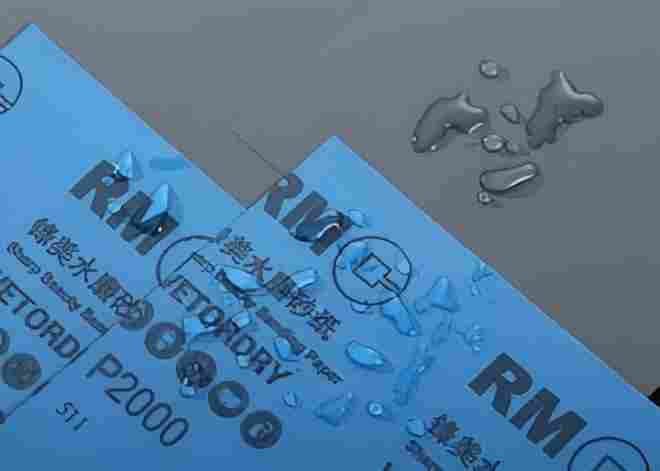
The quality of wet sanding depends not only on the abrasive itself but also on how the sanding process is performed. Proper technique helps maximize abrasive performance while reducing unnecessary surface correction work.
Maintaining sufficient lubrication is one of the key factors in waterproof sanding. Water helps remove sanding residue from the working area and keeps the abrasive surface cleaner during operation. This allows the abrasive grains to maintain more consistent contact with the material.
Sanding pressure should also be controlled carefully. Excessive force does not always improve efficiency and may create uneven sanding patterns or accelerate abrasive wear. A steady and consistent approach usually produces better finishing results.
The sanding sequence is another important factor. Many professionals begin with a coarser water paper grit to remove surface imperfections and gradually move to finer grits to improve smoothness. This step-by-step approach helps create a more uniform surface before polishing or coating.
Different materials require different sanding strategies. Automotive coatings, metals, plastics, and composite materials each have unique characteristics, meaning abrasive selection should always consider the specific application.
Choosing the correct water paper grit is essential for achieving the desired surface finish. The wrong grit selection may either remove material too slowly or create unnecessary scratches that require additional processing.
| Water Paper Grit Type | Main Purpose | Typical Applications |
|---|---|---|
| Coarser Grit | Surface correction and defect removal | Removing scratches, coating imperfections, and uneven areas |
| Medium Grit | Surface refinement | Reducing sanding marks and preparing for finishing |
| Fine Grit | Final smoothing and polishing preparation | Creating refined surfaces before polishing or coating |
Professional users usually select a grit sequence rather than relying on a single abrasive grade. For example, a damaged coating surface may require stronger cutting action at the beginning, followed by finer waterproof sandpaper to achieve the required appearance.
Understanding the relationship between grit selection and surface requirements helps improve efficiency and reduces unnecessary sanding steps.
For professional sanding operations, abrasive durability directly affects productivity. A reliable waterproof sandpaper should maintain cutting performance throughout the sanding process while resisting problems such as premature grain loss and surface clogging.
The service life of waterproof abrasive paper depends on several factors, including abrasive grain quality, bonding technology, backing strength, and working conditions. Products designed for professional applications need to provide a balance between cutting efficiency and long-term stability.
In manufacturing environments, consistency is equally important. When abrasive performance changes between batches, it can affect production efficiency and final product quality. Reliable abrasive materials help companies maintain more predictable finishing results.
RIKEN Abrasives focuses on developing abrasive solutions that support different industrial requirements. For applications involving special materials, customized abrasive specifications, or large-volume purchasing needs, customers can contact RIKEN’s abrasive specialists to discuss suitable solutions.
Waterproof sandpaper provides a practical solution for professional finishing applications where surface quality, consistency, and process control are important. Its ability to perform effectively in wet sanding environments makes it suitable for automotive refinishing, industrial processing, and precision surface treatment.
Selecting the appropriate water paper grit allows users to balance cutting performance and finishing requirements. From correcting surface defects to preparing surfaces for polishing and coating, the right abrasive selection can significantly improve both efficiency and final appearance.
With experience in abrasive manufacturing, RIKEN Abrasives develops waterproof abrasive paper solutions designed for different materials and working conditions. Through suitable abrasive structures and application-focused development, RIKEN helps customers achieve reliable sanding performance across various industries.
Waterproof sandpaper is mainly used for wet sanding applications, including automotive refinishing, polishing preparation, coating finishing, and precision surface treatment.
Waterproof sandpaper uses water-resistant backing and bonding materials, allowing it to maintain performance when used with water or liquid lubrication.
Water helps remove sanding residue, reduce friction, control heat, and improve the consistency of the finished surface.
The correct water paper grit depends on the surface condition and finishing goal. Coarser grits are used for correction, while finer grits are used for smoothing and polishing preparation.
Yes. Waterproof sandpaper can be used for metal finishing, coating preparation, and polishing when the appropriate abrasive specification is selected.
Using proper sanding pressure, sufficient lubrication, and the correct grit sequence can help extend abrasive life and improve finishing results.

 English
 中文
中文
 한국어
한국어 français
 Deutsch
 Español
 italiano
 русский
 português
 العربية
 tiếng việt
 Polska