

Selecting the right industrial abrasives is a critical factor in maintaining consistent production quality and operational efficiency. For manufacturers in woodworking, furniture production, and board manufacturing, the quality of your abrasive paper roll directly influences surface finish, waste reduction, and tool longevity. However, identifying reliable sanding rolls suppliers in a global market can be challenging. This guide provides the technical and commercial insights necessary to navigate your procurement process effectively.
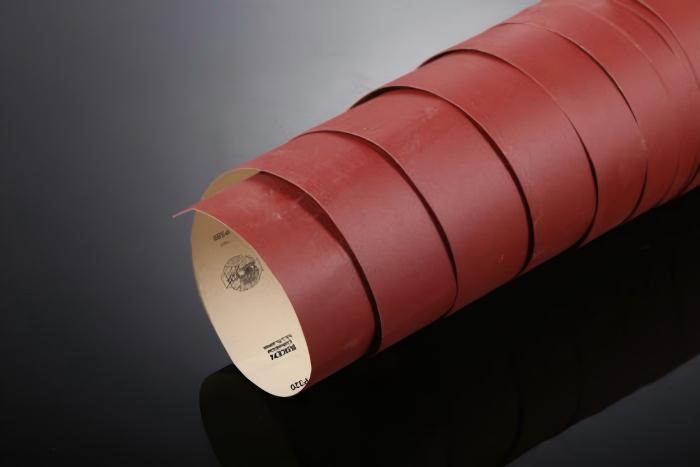
An abrasive paper roll is not merely a consumable; it is a high-precision tool. At Zibo Sankyo Rikagaku Abrasives, we utilize advanced electrostatic sand-planting processes to bond high-grade grains to a durable paper base. When sourcing from professional sanding rolls suppliers, you must prioritize the integrity of this bond. A superior abrasive paper roll utilizes high-strength resins to ensure that grains remain attached to the backing even under the aggressive shear forces found in machine sanding applications.
The performance of your sanding process is largely determined by the backing of the abrasive paper roll. Industry standards differentiate between light-weight and heavy-weight backings:
Heavy-weight E-wt backing: Offers high tensile strength and low elongation. It is the ideal choice for fixed-thickness sanding in furniture and board manufacturing.
Low-weight backing: Engineered for flexibility, making it perfect for paint sanding on contoured surfaces, musical instruments, and high-end cabinetry where fine scratch patterns are required.
For those navigating the market of sanding rolls suppliers, verifying that your partner provides diverse backing options is the first step toward optimizing your specific production line.
To ensure your production line maintains peak efficiency, you must match the abrasive characteristics to your specific material. Choosing the wrong combination often leads to premature failure or poor surface quality. To simplify this decision, we have summarized the critical technical factors in the table below:
| Feature | Specification / Recommendation | Purpose |
|---|---|---|
| Grain Type | Aluminum Oxide or Silicon Carbide | Selection based on material hardness |
| Bonding Agent | Phenolic or Epoxy Resin | Durability vs. Flexibility balance |
| Anti-Clogging | Special Antistatic Treatment | Extends life and prevents loading |
| Backing Type | Heavy-weight (E-wt) or Light-weight | Matching to application surface |
By aligning these specifications with your machinery and substrate, you ensure that the abrasive paper roll performs optimally under varying loads. Reliable sanding rolls suppliers should be able to consult on these specific configurations to prevent common defects like burning or uneven scratch patterns.
When evaluating sanding rolls suppliers, do not rely solely on price. The true cost of an abrasive paper roll is calculated by its "life-per-unit" and the consistency of the scratch pattern it produces.
A reliable supplier must maintain consistent quality across batches. Zibo Sankyo Rikagaku Abrasives employs rigorous quality control systems to ensure grit adhesion and tear resistance meet strict international standards. If a supplier cannot provide evidence of consistent manufacturing processes, the risk of downtime on your production line increases significantly.
The best sanding rolls suppliers act as technical partners. They should be able to offer guidance on resin types—such as using hard, wear-resistant phenolic resins for aggressive machine grinding or softer epoxy resins for manual finishing. Understanding these nuances allows you to fine-tune your inventory for better results.
Global logistics and stock availability are essential. Whether you are looking for standard product lines or specialized custom configurations, your chosen supplier should demonstrate an ability to scale production to your needs.
As one of the industry’s most established sanding rolls suppliers, Zibo Sankyo Rikagaku Abrasives specializes in delivering an abrasive paper roll that combines superior anti-clogging capabilities with extended product longevity. We understand that industrial environments demand high performance without compromise. By integrating advanced antistatic treatments, our products facilitate the continuous removal of sanding dust, allowing for a more consistent sanding pattern throughout the entire roll.
We invite you to explore our complete product catalog to see how our engineered abrasives can improve your operational output. If you are currently evaluating your supply chain, we encourage you to contact our team for a tailored consultation.
Sourcing a premium abrasive paper roll requires a deep understanding of your own production requirements, from backing toughness to grain distribution. By prioritizing sanding rolls suppliers who offer technical expertise, consistent quality standards, and verified performance characteristics, you can significantly reduce material waste and downtime. Investing in high-quality abrasives is not just about the upfront cost; it is about securing the efficiency and finish quality that define your brand’s excellence in the marketplace.
1. Why does the backing weight of an abrasive paper roll matter?
The backing weight dictates the application suitability. Heavy-weight backing is necessary for aggressive material removal and fixed-thickness sanding, while light-weight backing offers the flexibility required for finishing contoured surfaces.
2. How do I identify reliable sanding rolls suppliers?
Look for suppliers that provide technical documentation, offer samples for quality testing, maintain consistent manufacturing standards, and demonstrate expertise in grain and resin technology.
3. What is the benefit of antistatic treatment on sanding rolls?
Antistatic treatment significantly reduces clogging by preventing sanding dust from sticking to the roll. This extends the product’s lifespan and maintains a consistent scratch pattern.
4. Can Zibo Sankyo Rikagaku Abrasives provide custom specifications for my production line?
Yes. As a leading manufacturer, we provide tailored solutions for grain types, grit sizes, and roll specifications to ensure our products integrate seamlessly into your specific grinding operations.

 English
 中文
中文
 한국어
한국어 français
 Deutsch
 Español
 italiano
 русский
 português
 العربية
 tiếng việt
 Polska