

Grinding pressure is often treated as a simple way to increase material removal. In practice, the relationship is more complicated. As pressure rises, the abrasive grain is asked to cut more aggressively, while the bond and backing have to withstand greater mechanical stress and the grinding zone generates more heat. Once these factors fall out of balance, pushing harder may no longer improve productivity. The disc can start to wear faster, generate excessive heat, or leave a less consistent surface.
This is where the construction of resin fiber sanding discs becomes particularly relevant. Their performance under demanding conditions is determined by how the abrasive grain, resin bond, and fiber backing work together rather than by grit size alone. For metalworking operations that rely on high-pressure grinding, understanding this interaction also makes it easier to compare products from different fiber disc manufacturers and choose a disc according to actual working conditions.
The cutting process starts at the abrasive grain. When a resin fiber sanding disc contacts a metal surface, the exposed grains penetrate the workpiece and remove material through controlled cutting and fracture. Increasing the applied force can make this engagement more aggressive, which is why higher pressure can sometimes produce faster stock removal.
There is, however, a point at which additional pressure stops being productive. A sharp abrasive grain should spend its energy cutting into the workpiece. If the contact becomes dominated by rubbing, the grinding zone becomes less efficient. Friction rises, more heat is produced, and the abrasive surface can lose its cutting character faster than expected.
This distinction matters in applications such as weld removal, edge preparation, surface leveling, and general metal fabrication. The objective is not simply to make the disc cut as aggressively as possible at the beginning. A well-balanced disc should continue presenting effective cutting points as the abrasive surface changes during use.
That is one of the reasons experienced fiber disc manufacturers look beyond abrasive grit when developing a product. Grain type, grain distribution, abrasive concentration, bond characteristics, and backing structure all influence how the disc behaves once pressure is applied. Two discs with the same nominal grit can therefore produce noticeably different results in the same grinding operation.
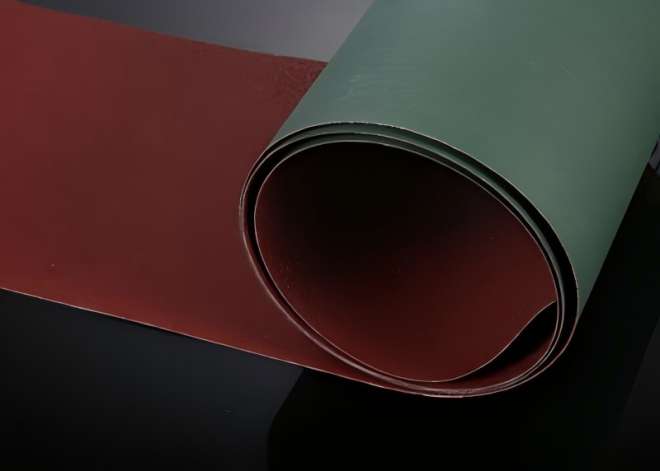
Once the abrasive grain begins cutting, the resin bond becomes responsible for holding that grain in position. Its job is not simply to keep every grain attached for as long as possible. The bond needs to retain the abrasive securely during cutting while allowing worn or fractured grains to leave the working surface at an appropriate rate.
If grain retention is too strong, dull abrasive particles can remain exposed and reduce cutting efficiency. The operator may then compensate by increasing pressure, which can make the disc run hotter without restoring the original cutting action. If the bond releases grains too readily, on the other hand, the disc may consume abrasive faster than necessary and lose its useful working life.
The fiber backing works alongside the bond. During heavy grinding, it provides the structural support needed to transfer pressure from the tool to the abrasive layer. A backing with suitable stiffness can help the disc maintain a stable contact pattern, while the right degree of flexibility allows it to follow the workpiece without becoming excessively distorted.
This interaction becomes especially noticeable when grinding large welds or working on surfaces where the operator naturally applies substantial force. The abrasive layer may have sufficient cutting capacity, but if the backing cannot maintain stable support, the overall grinding process can still become inconsistent.
For that reason, resin fiber sanding discs should be considered as a complete construction rather than simply an abrasive grit mounted on a backing. Grain, bond, and backing have to complement one another if the disc is expected to remain stable under heavy loads.
| Factor | Effect Under High Grinding Pressure | Performance to Look For |
|---|---|---|
| Abrasive grain | Receives greater cutting force and experiences faster wear | Effective cutting with controlled grain breakdown |
| Resin bond | Must withstand greater mechanical and thermal stress | Balanced grain retention and release |
| Fiber backing | Transfers and supports the applied grinding force | Stable contact with appropriate flexibility |
| Disc wear | Can accelerate as grinding pressure increases | Predictable wear without premature loss of cutting ability |
| Grinding heat | Can rise when cutting becomes less efficient | Efficient material removal with controlled heat generation |
In production grinding, the amount of material removed in the first few seconds tells only part of the story. What matters over a longer grinding cycle is whether the disc can continue removing material at a useful rate without consuming abrasive excessively.
High pressure can certainly increase stock removal when the abrasive grains remain sharp and properly supported. At the same time, the additional force places greater stress on the abrasive structure. Grain fracture, bond wear, and backing stress can all increase as the grinding load becomes more severe.
A useful disc therefore needs a controlled wear pattern. As individual abrasive grains become dull, new cutting points should become available through appropriate grain fracture or release. This allows the working surface to renew itself instead of becoming dominated by worn abrasive particles.
The difference can be significant in practical metalworking. A disc that feels extremely aggressive at the beginning may not necessarily deliver the highest productivity over its entire service life. If its cutting ability drops quickly, operators may spend more time changing discs or applying additional pressure. A slightly more balanced abrasive can sometimes deliver a more consistent removal rate and a lower overall abrasive cost.
This is also why comparisons between fiber disc manufacturers should not stop at purchase price or initial cutting speed. Disc life, removal efficiency, surface condition, and the amount of pressure required to maintain performance all contribute to the real value of an abrasive product.
As grinding pressure increases, heat becomes harder to ignore. Efficient abrasive cutting converts much of the applied energy into material removal, but when abrasive grains begin sliding or rubbing against the workpiece, friction becomes a larger part of the process. The result is a hotter grinding zone and a greater thermal load on both the workpiece and the disc.
For metalworking applications, excessive heat can affect the appearance and condition of the finished surface. This can be particularly noticeable when the process involves prolonged contact, thin sections, or materials that are sensitive to thermal input. A disc that cuts efficiently can therefore have an advantage even when its initial stock removal rate appears similar to another product.
Disc stability also influences the final surface. When the backing and abrasive layer remain stable under pressure, the contact between the disc and workpiece is easier to control. Uneven wear or excessive deformation can change that contact pattern, producing an inconsistent grinding effect as the disc continues to wear.
Operators sometimes respond to a declining cutting rate by pushing harder on the tool. That approach may work briefly, but it can also accelerate wear and heat generation. If the abrasive surface has already become inefficient, selecting a better-matched disc is often more effective than simply increasing pressure.
For manufacturers such as Riken, this makes abrasive construction closely connected with real application performance. The value of resin fiber sanding discs is not limited to how quickly they begin cutting; their ability to remain predictable as pressure, temperature, and abrasive wear change is equally relevant.
There is no single resin fiber sanding disc that is ideal for every high-pressure application. The right choice begins with the material being ground, the amount of stock that needs to be removed, the desired surface condition, and the way the tool will actually be operated.
Heavy weld removal, for example, places different demands on a disc than light surface preparation. A process that requires substantial stock removal may benefit from a construction designed to maintain aggressive cutting under pressure, while a blending operation may place greater emphasis on control, flexibility, and surface consistency.
The workpiece material also matters. Stainless steel, carbon steel, aluminum, and other metals respond differently to abrasive contact. Some materials tend to generate more heat during grinding, while others can load the abrasive surface if the disc is not properly matched to the application.
Tool conditions should be considered at the same time. The grinder's operating speed, the way pressure is applied, the contact area, and the duration of each grinding cycle all influence how a disc wears. A product that performs well in short, aggressive passes may behave differently during extended grinding.
For buyers comparing fiber disc manufacturers, application-specific testing is therefore more meaningful than relying on a single specification. The most useful evaluation looks at how much material the disc removes, how consistently it cuts as it wears, how much heat it generates, and how long it remains practical to use.
Riken's abrasive product range provides a starting point for comparing solutions according to different grinding requirements. When the application involves unusually high pressure, a specific metal, or a particular balance between stock removal and surface quality, discussing the working conditions directly with Riken through its contact page can make product selection more precise.
High-pressure grinding is not simply a matter of applying more force to achieve faster cutting. The abrasive grain must remain effective, the resin bond must provide controlled grain retention, and the fiber backing must keep the disc stable as mechanical and thermal loads increase. When these elements remain in balance, the disc can maintain useful stock removal without unnecessary wear or excessive heat.
For users selecting resin fiber sanding discs, the most meaningful comparison is therefore based on performance throughout the grinding cycle rather than initial cutting aggression alone. Disc life, cutting consistency, heat generation, backing stability, and surface quality all influence the final result. Working with experienced fiber disc manufacturers can also help match the abrasive construction to the actual demands of the metalworking process.
They can, provided the disc is designed for the application. Excessive pressure can increase friction, heat, and wear instead of improving material removal.
Greater pressure increases the force acting on active abrasive grains. This can improve cutting engagement, but it can also accelerate grain fracture and wear if the load becomes excessive.
The fiber backing supports the abrasive layer and helps transfer grinding force. Its stiffness and flexibility affect contact stability and overall disc behavior.
The bond controls how firmly abrasive grains are retained. A suitable bond allows grains to remain effective while releasing worn abrasive at an appropriate rate.
Yes. When pressure causes more rubbing than effective cutting, friction increases and additional energy is converted into heat.
Look at abrasive construction, backing and bond quality, cutting consistency, wear behavior, application suitability, and the manufacturer's ability to provide a product suited to your actual grinding conditions.

 English
 中文
 한국어
 français
 Deutsch
 Español
 italiano
 русский
 português
 العربية
 tiếng việt
 Polska