

Surface finishing quality is often determined long before the final polishing stage. The choice of abrasive, the compatibility between the sanding material and the workpiece, and the stability of the sanding process all influence whether the final surface achieves the expected appearance and performance. A sanding sheet that works effectively on one material may deliver poor results on another if its abrasive structure does not match the surface characteristics.
This is why selecting suitable velcro backed sanding sheets requires more than simply choosing a grit number. Material hardness, surface condition, finishing requirements, and sanding equipment all affect abrasive performance. By understanding these factors, manufacturers and professional users can reduce surface defects, improve processing efficiency, and achieve more consistent finishing results.
Compared with traditional sanding solutions, velcro backed sanding pads provide greater convenience during multi-stage sanding operations because the hook-and-loop attachment system allows quick replacement while maintaining reliable positioning. This makes them suitable for applications where operators need to switch between different abrasive grades frequently.
As an abrasive solution provider, Zibo Sankyo Rikagaku MT focuses on developing sanding products designed for different surface treatment requirements. Understanding how abrasive grain, backing structure, and attachment methods influence sanding performance helps users select more suitable solutions. When comparing sanding options for different materials and finishing stages, users can review Zibo Sankyo Rikagaku MT’s range of abrasive products to better understand how different abrasive structures are applied in surface treatment processes.
Every material responds differently during sanding because surface characteristics determine how abrasive forces interact with the workpiece. Factors such as hardness, density, texture, coating condition, and surface geometry all influence the required sanding approach.
For soft materials such as certain types of wood, excessive cutting force can damage surface fibers and create uneven finishing marks. In these applications, abrasives need to provide controlled material removal while maintaining a smooth surface appearance. Flexible velcro backed sanding pads are often suitable because they can adapt to slight surface variations and maintain more uniform contact.
Harder materials, including metals and some engineered composites, require abrasives with stronger cutting ability and improved wear resistance. During metal finishing, friction and heat generation can quickly reduce abrasive effectiveness if the sanding sheet is not designed for the application.
Surface shape is another important consideration. Flat surfaces generally require stable abrasive support, while curved or irregular components need sanding solutions that can follow changing contours. The flexibility and attachment stability of velcro backed sanding sheets make them useful in applications where consistent contact pressure is important.
By evaluating surface characteristics before selecting abrasives, users can avoid unnecessary sanding steps and achieve better balance between material removal efficiency and final surface quality.
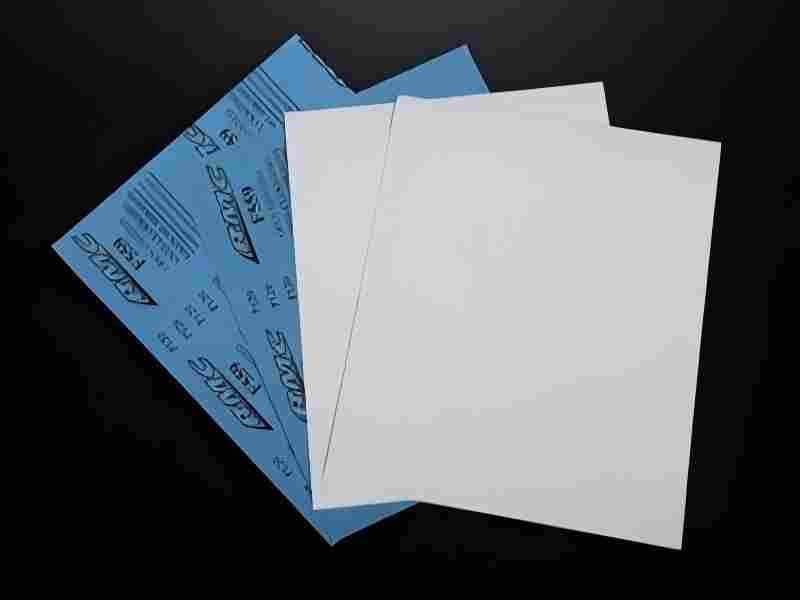
The abrasive grain and grit structure determine how a sanding sheet cuts, wears, and influences the final surface texture. Choosing the right combination is essential for controlling both productivity and finishing quality.
Coarser abrasives are commonly used when significant material removal is required, such as removing old coatings, correcting surface imperfections, or preparing rough materials. However, they usually create deeper scratch patterns, meaning additional finishing steps may be required.
Medium-grit abrasives are often used for general surface preparation because they provide a balance between cutting efficiency and surface refinement. Fine-grit sanding sheets are typically selected for final finishing processes where appearance, smoothness, and consistency are critical.
| Selection Factor | Main Function | Typical Applications | Effect on Surface Finish |
|---|---|---|---|
| Coarse grit | Fast material removal | Coating removal, rough shaping, surface correction | Higher cutting speed with more visible sanding marks |
| Medium grit | Balanced sanding performance | General preparation and intermediate finishing | Combines efficiency with improved surface smoothness |
| Fine grit | Surface refinement | Final finishing, polishing preparation, appearance-focused work | Creates smoother and more uniform surfaces |
| Flexible backing | Surface adaptation | Curved components and complex geometries | Helps reduce uneven pressure marks |
The abrasive grain type also affects sanding performance. Some grain structures are optimized for aggressive cutting, while others are designed for longer service life or smoother finishing. Therefore, selecting velcro backed sanding sheets should involve consideration of both grit size and abrasive construction rather than relying on a single specification.
The versatility of velcro backed sanding sheets comes from their ability to support different finishing processes when matched with suitable abrasive characteristics. However, each material category presents different challenges that require careful selection.
In woodworking applications, sanding focuses on removing surface imperfections while preserving the natural appearance of the material. Wood surfaces may contain soft areas, grain variations, or delicate edges, making controlled sanding performance important. A suitable abrasive helps achieve smooth results without excessive material loss.
Metal finishing requires stronger abrasive performance because metals typically generate higher friction during sanding. Materials such as aluminum, stainless steel, and carbon steel may require abrasive grains that maintain cutting efficiency under demanding conditions. Durable velcro backed sanding pads can help support repeated sanding operations while allowing fast abrasive changes.
Plastic and composite materials require additional attention because excessive heat or aggressive sanding can affect surface quality. Unsuitable abrasives may cause clogging, melting, or unwanted deformation. Proper grit selection and controlled sanding pressure help maintain surface integrity.
For industries working with multiple material types, choosing abrasives based on actual surface behavior rather than general assumptions can significantly improve finishing consistency.
Although abrasive grains perform the actual cutting action, the backing structure determines how effectively the sanding sheet transfers pressure to the surface. A well-designed backing improves stability, flexibility, and operator control during sanding.
Rigid backing materials are suitable for applications requiring stronger support on flat surfaces, while flexible backing designs allow better adaptation to curved components. This balance between support and flexibility helps reduce uneven sanding patterns.
The hook-and-loop attachment system is one of the main advantages of velcro backed sanding pads and velcro backed sanding sheets. Unlike permanently attached abrasive systems, hook-and-loop designs allow operators to replace worn sheets quickly and change between different grits during different processing stages.
This feature is particularly valuable in professional environments where productivity depends on minimizing downtime. Stable attachment also helps maintain consistent sanding movement, reducing the possibility of sheet displacement during operation.
Many surface finishing problems originate from a mismatch between abrasive characteristics and material requirements. Selecting the wrong sanding sheet can increase processing time and reduce final product quality.
Uneven scratch patterns are one common issue. This may occur when the abrasive grit is too aggressive for the finishing stage or when the sanding sheet cannot maintain consistent contact with the surface.
Premature abrasive wear is another challenge. When a sanding sheet designed for softer materials is used on harder surfaces, the abrasive may lose cutting ability quickly. This increases replacement frequency and reduces process efficiency.
Surface overheating can also affect finishing results, especially when processing plastics, coatings, or heat-sensitive composites. Selecting suitable abrasive structures and maintaining appropriate sanding pressure can help control heat generation.
Achieving reliable finishing results requires a complete understanding of how abrasives interact with different surfaces. Instead of focusing only on grit selection, users should evaluate abrasive grain, backing flexibility, attachment performance, and application conditions together.
Velcro backed sanding sheets and velcro backed sanding pads offer practical advantages for modern sanding operations because they combine convenient replacement with adaptable surface contact. However, their performance depends on choosing the right specifications for each material and processing stage.
For companies seeking improved sanding performance, selecting the right abrasive solution based on surface conditions and processing requirements is essential. Zibo Sankyo Rikagaku MT combines abrasive experience with application knowledge to support industries requiring stable and consistent finishing results. If a specific material, sanding process, or finishing requirement requires further discussion, users can get in touch with Zibo Sankyo Rikagaku MT’s team to explore suitable abrasive options.
The quality of a finished surface depends heavily on selecting an abrasive solution that matches the characteristics of the material being processed. Hardness, surface condition, required finish level, abrasive grain, and backing structure all influence sanding performance.
By choosing suitable velcro backed sanding sheets and velcro backed sanding pads, users can improve sanding efficiency, reduce surface defects, and achieve more consistent finishing results across different applications. A better understanding of abrasive and material compatibility allows sanding processes to become more predictable, efficient, and cost-effective.
Velcro backed sanding sheets are used for surface preparation, material removal, and finishing applications on materials such as wood, metal, plastic, and composites.
The correct grit depends on the material condition and finishing stage. Coarse grits remove material faster, while fine grits are used for smoother finishing.
Velcro backed sanding pads allow quick replacement, stable attachment, and flexible use across different sanding tools and applications.
Yes. When matched with suitable abrasive grains and backing structures, they can provide effective metal sanding performance.
Uneven marks may result from incorrect grit selection, worn abrasives, excessive pressure, or poor compatibility between the abrasive and material.
Users should consider material type, required surface finish, abrasive grain, grit size, backing structure, and attachment method.

 English
 中文
 한국어
 français
 Deutsch
 Español
 italiano
 русский
 português
 العربية
 tiếng việt
 Polska