


Precision sanding is not simply about removing material from a surface; it is about controlling how much material is removed, how evenly the surface is refined, and how consistently the desired finish can be achieved. In industries such as automotive finishing, electronics manufacturing, woodworking, metal processing, and composite fabrication, abrasive selection plays a critical role in determining final surface quality.
Among various abrasive materials, silicon carbide has become widely recognized for its sharp cutting ability, excellent hardness, and suitability for applications requiring precise surface treatment. SiC abrasive paper is commonly selected when users need efficient cutting performance combined with a refined finish, especially on materials that require controlled sanding processes.
The performance of SiC sandpaper depends on multiple factors, including silicon carbide grain characteristics, abrasive distribution, backing structure, bonding technology, and compatibility with different surface requirements. Understanding how these elements work together allows users to choose the right abrasive solution for improved efficiency and consistent finishing results.
Zibo Sankyo Rikagaku MT focuses on developing abrasive solutions designed for different industrial surface treatment needs. By considering abrasive composition, product structure, and application conditions, users can select more suitable options for precision sanding projects. Zibo Sankyo Rikagaku MT’s abrasive product range provides reference solutions for applications requiring reliable sanding performance and surface consistency.
The performance advantages of SiC abrasive paper begin with the unique characteristics of silicon carbide grains. Silicon carbide is a synthetic abrasive material known for its high hardness and sharp, angular grain structure. These properties allow abrasive particles to penetrate surfaces effectively and maintain efficient cutting action during sanding.
Compared with softer abrasive materials, silicon carbide grains are particularly suitable for applications where fast material removal and precise surface refinement are required. The sharp edges of silicon carbide particles create clean cutting action, which helps reduce excessive friction and supports smoother sanding performance.
This makes SiC sandpaper widely used for applications involving materials such as coatings, plastics, glass, ceramics, non-ferrous metals, and composite materials. In these applications, the abrasive needs to remove imperfections while minimizing surface damage.
Another important characteristic of silicon carbide is its ability to produce consistent scratch patterns when properly selected. The grain shape, size, and distribution directly influence the final surface appearance. For precision sanding, maintaining predictable cutting behavior is essential because inconsistent abrasive action can lead to uneven finishing results.
Therefore, when selecting SiC abrasive paper, users should consider not only the abrasive material itself but also how the grain structure matches the intended sanding process.
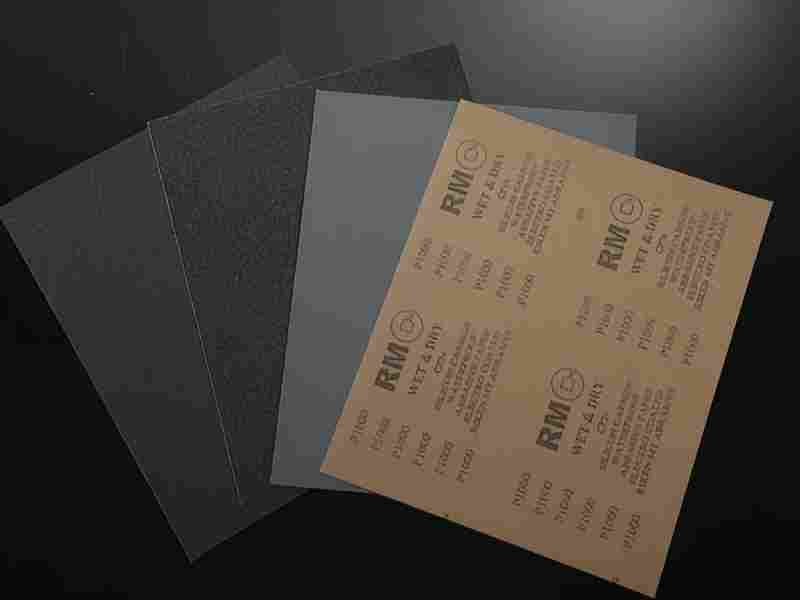
The abrasive structure determines how effectively sanding energy is transferred to the workpiece surface. Even when high-quality silicon carbide grains are used, uneven grit distribution or unsuitable abrasive density can negatively affect sanding performance.
Grit size is one of the most important factors influencing surface results. Coarser grits are generally selected for stronger material removal, while finer grits are used when smoother finishing and surface refinement are required. Selecting an inappropriate grit can increase processing time or create unwanted surface marks.
In precision sanding applications, consistent grit distribution helps ensure that abrasive particles engage with the surface evenly. This reduces variations in cutting pressure and improves the uniformity of the final finish.
| Performance Factor | Influence on Sanding | Suitable Applications | Effect on Surface Results |
|---|---|---|---|
| Silicon carbide grain sharpness | Improves cutting efficiency | Hard materials, coatings, composites | Creates clean and controlled material removal |
| Fine grit structure | Supports surface refinement | Final finishing and polishing preparation | Produces smoother surface appearance |
| Uniform grit distribution | Maintains consistent abrasive contact | Precision sanding operations | Reduces uneven scratches |
| Abrasive density | Influences cutting balance and wear rate | Continuous sanding processes | Improves overall sanding stability |
A well-designed sic sandpaper structure allows abrasive grains to work efficiently throughout the sanding process. This is especially important in industrial applications where surface quality requirements are strict and repeated processing consistency is necessary.
Although abrasive grains perform the cutting action, the backing material determines how the sanding paper behaves during operation. A suitable backing structure provides the necessary balance between strength, flexibility, and user control.
For flat surface sanding, a stronger backing can provide better support and maintain stable contact pressure. However, applications involving curved surfaces or complex geometries require more flexible backing materials that can adapt to changing surface shapes.
The durability of SiC abrasive paper is also closely related to backing design. A well-constructed backing helps prevent premature tearing, improves handling performance, and allows the abrasive layer to maintain effective contact during sanding.
Different applications may require different backing characteristics. For example, precision finishing may prioritize flexibility and surface adaptation, while heavy-duty sanding may require additional strength to withstand greater mechanical stress.
By matching backing design with application requirements, users can improve abrasive utilization and achieve more stable sanding performance.
The bonding system is another key factor affecting abrasive durability. During sanding, abrasive grains experience continuous friction and mechanical forces. Without effective bonding technology, grains may detach prematurely, reducing cutting efficiency and shortening product life.
High-quality bonding systems help secure silicon carbide grains to the backing surface while allowing the abrasive to maintain effective cutting performance. The balance between grain retention and controlled wear is essential because excessive retention may reduce cutting sharpness, while insufficient retention can lead to rapid abrasive breakdown.
Coating technologies also influence how SiC abrasive paper performs under different working conditions. Proper coatings can improve resistance to loading, support smoother sanding action, and help maintain consistent abrasive exposure.
For applications involving materials that generate significant dust or debris, coating design becomes particularly important. A suitable surface treatment can help maintain cleaner abrasive performance and reduce interruptions caused by clogging.
Different finishing applications require different abrasive characteristics. Choosing the right SiC abrasive paper depends on understanding the relationship between the workpiece material, desired surface condition, and required processing efficiency.
For example, in automotive refinishing, abrasives must remove coatings while preparing surfaces for subsequent treatments. In electronics and precision component manufacturing, sanding requirements often focus on achieving controlled surface smoothness without damaging delicate materials.
For composite materials, abrasive selection becomes more challenging because excessive cutting force may affect surface integrity. Silicon carbide abrasives are often preferred because their sharp grain structure enables effective cutting with controlled sanding behavior.
When selecting SiC sandpaper, users should consider the entire sanding process rather than focusing only on abrasive hardness. Factors such as grit selection, backing flexibility, bonding performance, and operating conditions all contribute to final results.
Zibo Sankyo Rikagaku MT supports users in evaluating abrasive requirements based on practical application conditions. For projects requiring more specific guidance regarding abrasive selection and surface finishing performance, users can get in touch with Zibo Sankyo Rikagaku MT’s team to discuss suitable abrasive options.
Consistent sanding results come from selecting an abrasive product that matches both the material characteristics and the finishing objective. Even high-performance abrasives cannot deliver optimal results if their structure does not align with the application requirements.
SiC abrasive paper provides advantages in precision sanding because of its sharp silicon carbide grains, adaptable structures, and reliable cutting performance. However, achieving the best results requires careful consideration of grit size, abrasive distribution, backing design, and bonding technology.
For industrial users, proper abrasive selection can improve surface consistency, reduce unnecessary processing steps, and enhance overall production efficiency. A complete understanding of abrasive performance factors helps ensure that sic sandpaper delivers reliable results across different finishing applications.
The performance of silicon carbide abrasive solutions is determined by more than the abrasive material itself. Grain characteristics, grit distribution, backing structure, bonding technology, and application compatibility all influence sanding effectiveness.
By selecting the appropriate SiC abrasive paper according to specific surface finishing requirements, users can achieve better control over material removal, improve surface quality, and maintain consistent processing results. Whether used for precision components, industrial finishing, or surface preparation, the right SiC sandpaper selection plays an important role in achieving reliable sanding performance.
SiC abrasive paper is mainly used for precision sanding, surface preparation, and finishing applications involving materials such as coatings, plastics, composites, glass, and metals.
Silicon carbide has sharp grain characteristics and high hardness, allowing efficient cutting performance while supporting controlled surface finishing.
Coarser grits provide faster material removal, while finer grits create smoother surfaces for final finishing applications.
Durability depends on abrasive grain quality, backing structure, bonding technology, coating design, and operating conditions.
Yes. When properly selected, sic sandpaper can provide effective sanding performance on composite materials while maintaining surface control.
The selection should consider material type, required finish quality, grit size, backing flexibility, and the specific sanding process.

 English
 中文
 한국어
 français
 Deutsch
 Español
 italiano
 русский
 português
 العربية
 tiếng việt
 Polska