


What determines the performance of a sanding tool is not always the component that does the cutting. Although abrasive grains receive most of the attention, the material supporting those grains often decides whether their cutting ability can be fully utilized. The backing layer controls how force is transferred, how the abrasive responds to surface changes, and how long the sanding process can remain stable.
This is why the design of a sandpaper roll involves far more than selecting an abrasive grain. A sanding roll must coordinate multiple factors, including backing strength, flexibility, dimensional stability, and abrasive retention. When these elements are properly balanced, the abrasive can maintain effective contact with the workpiece and deliver more consistent finishing results.
For applications using silicon carbide sandpaper roll, backing performance becomes especially important. Silicon carbide grains are known for their sharp cutting edges and efficient material removal capability, but without suitable support from the backing structure, these advantages may not translate into stable sanding performance.
Zibo Sankyo Rikagaku MT approaches abrasive development by considering the complete relationship between abrasive materials and product structure. By understanding how different backing designs influence sanding behavior, users can select solutions that better match their processing conditions through Zibo Sankyo Rikagaku MT’s range of abrasive products for industrial surface treatment applications.
The abrasive grain is responsible for cutting action, but the backing determines how effectively that cutting action can be delivered. During sanding, the backing layer absorbs pressure, supports abrasive particles, and influences how evenly the abrasive surface contacts the workpiece.
For a sandpaper roll, backing structure directly affects several performance characteristics, including flexibility, tear resistance, pressure distribution, and operational stability. A backing that is too weak may stretch, deform, or tear under stress, causing uneven sanding results. A backing that is too rigid may reduce surface adaptability and make it difficult to process complex shapes.
The relationship between abrasive grain and backing material is especially important in continuous sanding applications. When the backing maintains stable support, abrasive grains can work more efficiently because they remain properly positioned against the surface. This improves material removal consistency and reduces unnecessary abrasive waste.
In industrial environments, where sanding processes often involve repeated movements and varying levels of pressure, backing design becomes a key factor in maintaining predictable results. A well-engineered backing allows the abrasive to perform consistently throughout the working cycle instead of losing effectiveness prematurely.
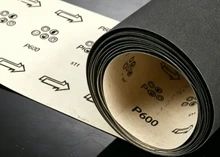
Different backing materials create different sanding behaviors because each structure provides a unique balance of strength, flexibility, and stability. Selecting the correct backing type is essential for matching abrasive performance with the requirements of a specific application.
Paper backing is one of the most commonly used options because it provides a practical balance between flexibility and cost efficiency. It is suitable for general sanding applications where moderate pressure and controlled finishing are required. Paper-backed sandpaper roll products are often used in woodworking, surface preparation, and general finishing tasks.
Cloth backing offers higher mechanical strength and improved durability compared with paper. Its reinforced structure allows it to handle greater stress, making it suitable for applications involving heavier material removal or repeated sanding cycles. In demanding industrial environments, cloth-backed abrasives provide additional support when stronger performance is required.
Film backing provides excellent dimensional stability and surface consistency. Because film materials maintain their shape well during use, they are often selected for precision finishing applications where uniform scratch patterns and controlled results are important.
| Backing Type | Main Characteristics | Typical Applications | Performance Advantages |
|---|---|---|---|
| Paper backing | Balanced flexibility and economy | General sanding, woodworking, surface preparation | Provides reliable performance for everyday sanding tasks |
| Cloth backing | High strength and durability | Heavy-duty sanding, metal processing, industrial applications | Handles higher pressure and extended use |
| Film backing | Stable dimensions and uniform support | Precision finishing and fine sanding | Improves surface consistency and control |
| Reinforced backing | Enhanced mechanical resistance | Demanding production environments | Improves durability under challenging conditions |
For applications requiring strong cutting ability, a silicon carbide sandpaper roll combined with the appropriate backing structure can provide better overall performance. Silicon carbide delivers sharp cutting action, while the backing helps maintain stability and maximize abrasive efficiency.
Not all sanding applications involve flat surfaces. Components with curved edges, irregular geometries, or changing contours require abrasive materials that can adapt without sacrificing cutting consistency.
The flexibility of a sandpaper roll is largely determined by its backing material. Flexible backings allow the abrasive surface to follow the shape of the workpiece more effectively, helping maintain better contact and reducing uneven sanding marks.
However, flexibility must be balanced with structural support. If the backing becomes too flexible, it may reduce control during high-pressure sanding. The abrasive may not maintain consistent contact, resulting in inefficient material removal and uneven surface treatment.
This balance is particularly important for silicon carbide sandpaper roll products. Silicon carbide grains provide aggressive cutting performance, but the backing must allow those grains to operate under controlled conditions. A suitable backing design helps combine flexibility, stability, and abrasive effectiveness.
Abrasive lifespan depends not only on grain quality but also on how effectively the backing protects and supports the abrasive layer. During sanding, mechanical stress can affect grain retention, surface contact, and overall tool durability.
A stronger backing helps prevent issues such as stretching, tearing, and premature deformation. When the backing maintains its structure, abrasive grains can continue performing effectively without losing contact with the workpiece.
For users operating a sandpaper roll in demanding environments, longer abrasive life can improve productivity by reducing replacement frequency and minimizing process interruptions. A properly matched backing allows the abrasive to wear in a controlled manner rather than failing suddenly.
In a silicon carbide sandpaper roll, this relationship is especially valuable because silicon carbide grains are designed for efficient cutting. Without reliable backing support, the abrasive may not achieve its expected service life or finishing performance.
Different materials place different demands on sanding tools. The ideal backing selection depends on factors such as material hardness, surface condition, processing speed, and required finish quality.
Wood processing often requires flexibility because natural materials may have uneven grain structures and changing surface characteristics. A suitable backing allows the abrasive to follow the surface while maintaining controlled material removal.
Metal processing usually requires stronger support because sanding operations may involve higher pressure and greater mechanical stress. Durable backing materials help maintain abrasive stability during edge preparation, surface correction, and finishing operations.
Composite materials and coated surfaces require careful control because excessive force can damage the surface layer. Selecting a suitable silicon carbide sandpaper roll with the correct backing characteristics helps achieve efficient cutting while maintaining surface quality.
The most effective sanding solution is achieved when abrasive grain properties and backing design are considered together rather than evaluated separately.
Consistent sanding results depend on the balance between abrasive performance and backing structure. While abrasive grains determine how material is removed, the backing controls how those grains interact with the surface during operation.
A well-designed sandpaper roll combines suitable abrasive technology with a backing material that supports the intended application. This combination improves cutting stability, surface consistency, and overall process efficiency.
For users selecting abrasive products for specific industrial requirements, Zibo Sankyo Rikagaku MT provides solutions based on practical application conditions. When a project requires further evaluation of material compatibility, abrasive structure, or finishing requirements, users can get in touch with Zibo Sankyo Rikagaku MT’s team to discuss suitable abrasive options.
By understanding the interaction between grain technology and backing design, manufacturers can make better abrasive choices and improve the reliability of their sanding operations.
The performance of a sanding tool is influenced by much more than abrasive grain selection. While the abrasive particles create the cutting action, the backing material determines how effectively that action is maintained during real-world applications.
From paper and cloth to film and reinforced structures, different backing designs provide different advantages for specific processing conditions. Choosing the right combination of abrasive grain and backing characteristics allows products such as silicon carbide sandpaper roll and sandpaper roll solutions to achieve better durability, adaptability, and finishing consistency.
Understanding the role of backing materials helps users improve sanding efficiency, reduce process variations, and select abrasive solutions that better match their production requirements.
The backing supports abrasive grains, controls flexibility, distributes pressure, and influences durability during sanding operations.
Paper provides balanced performance, cloth offers higher strength, and film provides excellent stability for precision sanding applications.
Silicon carbide provides sharp cutting performance and is suitable for applications requiring efficient material removal and controlled finishing.
Flexible backing improves surface adaptation, while stronger backing provides better support during high-pressure sanding.
Service life depends on abrasive grain quality, backing strength, bonding performance, material type, and operating conditions.
The selection should consider abrasive type, backing material, workpiece characteristics, required finish, and sanding process requirements.

 English
 中文
中文
 한국어
한국어 français
 Deutsch
 Español
 italiano
 русский
 português
 العربية
 tiếng việt
 Polska