


When a coated abrasive starts cutting more slowly, produces more heat, or requires noticeably higher pressure to maintain the same removal rate, the grain is often part of the reason. The abrasive grain is the point where the tool actually meets the workpiece, so its shape, structure, toughness, and fracture behavior have a direct effect on what happens during grinding or sanding.
This becomes particularly important when coated abrasives are expected to maintain cutting performance over extended use. A grain that works well at the beginning but quickly develops a dull contact surface can increase friction and reduce productivity. By contrast, a properly engineered ceramic grain can renew its cutting edges as it wears, helping the abrasive maintain a more active cutting action.
For manufacturers, selecting ceramic abrasive grain is consequently more involved than choosing a grit size. The grain needs to suit the workpiece and operating conditions, but it also needs to work with the backing, bond, coating density, and intended abrasive format. Understanding the properties that control grain behavior makes it easier to determine which ceramic solution is appropriate for a particular coated abrasive.
The internal structure of an abrasive grain determines much of its behavior under load. Every time a coated abrasive contacts a workpiece, individual grains experience mechanical stress as they penetrate the surface and remove material. How those grains respond to that stress has a direct influence on cutting efficiency and abrasive life.
A well-designed ceramic abrasive grain does not simply rely on hardness to produce cutting performance. Its microstructure can be engineered to provide an appropriate balance between strength and controlled fracture. When a cutting edge begins to wear, the grain can respond to continued loading by breaking in a controlled manner rather than remaining as a blunt surface.
This behavior matters because abrasive performance changes throughout the working cycle. At the beginning of grinding, sharp grains can engage the workpiece efficiently. As the operation continues, those same grains gradually wear. If the grain structure allows suitable fracture, new cutting points can become exposed and the abrasive can continue removing material without a proportional increase in grinding pressure.
The opposite can also occur. A grain that breaks down too readily may disappear before it has delivered enough useful cutting action. One that is excessively resistant to fracture may remain in the coating while its cutting edge becomes increasingly dull. Neither extreme is desirable, which is why grain structure needs to be considered in relation to the intended application rather than evaluated as an isolated specification.
The shape of an abrasive grain determines how it initially contacts the workpiece. A sharp cutting point can penetrate the material with relatively concentrated force, while a rounded or worn surface tends to increase contact and rubbing. That difference may seem small at the individual grain level, but it becomes significant when thousands of grains are working simultaneously across a coated abrasive.
Grain geometry is particularly relevant to applications where material removal rate matters. A suitable ceramic abrasive grain can provide cutting points that engage the workpiece efficiently, allowing the abrasive to remove material without relying entirely on increased pressure from the operator or machine.
Metalworking is a good example. During weld grinding, edge preparation, or heavy stock removal, the abrasive encounters considerable mechanical resistance. Grain geometry that supports effective penetration can help maintain cutting action as the abrasive moves across the surface. If the grain becomes too blunt, more of the contact energy is converted into friction rather than useful material removal.
Wood sanding presents a different challenge. The objective is often to remove material efficiently while keeping the resulting surface consistent. Wood grain ceramic can be considered for coated abrasive applications where ceramic grain performance is needed for wood and wood-based materials. The appropriate grain shape can help provide a useful balance between sanding rate and control rather than simply maximizing aggressiveness.
It is also important to remember that grain geometry does not operate independently. The way grains are distributed and oriented in the coating, together with the backing flexibility and resin system, influences how much force is actually transferred to each cutting point. A grain that performs well in one abrasive construction may not produce exactly the same result in another.
One reason ceramic grain can maintain cutting performance during extended use is controlled microfracturing. As an abrasive grain works against a surface, its active cutting points gradually experience wear. If the worn area simply remains intact, the grain eventually behaves more like a rubbing surface than a cutting point.
With an appropriately engineered ceramic grain, continued mechanical loading can cause small portions of the grain to fracture. This exposes new areas of the grain and creates fresh cutting points. The process is often referred to as self-sharpening, although the actual behavior depends on the grain's structure and the stresses generated during the application.
The important word is “controlled.” The goal is not to make the grain fracture as quickly as possible. Excessive fracture can consume the abrasive too rapidly, while insufficient fracture can leave worn grains in the coating for too long. A useful ceramic abrasive grain needs to fracture at a rate that corresponds reasonably well with the rate at which its cutting edges become ineffective.
This balance can be especially valuable in continuous grinding and sanding operations. Instead of experiencing a rapid decline from sharp cutting to heavy rubbing, the abrasive has an opportunity to replace worn cutting points during use. The result is a more stable cutting response when the grain and operating conditions are properly matched.
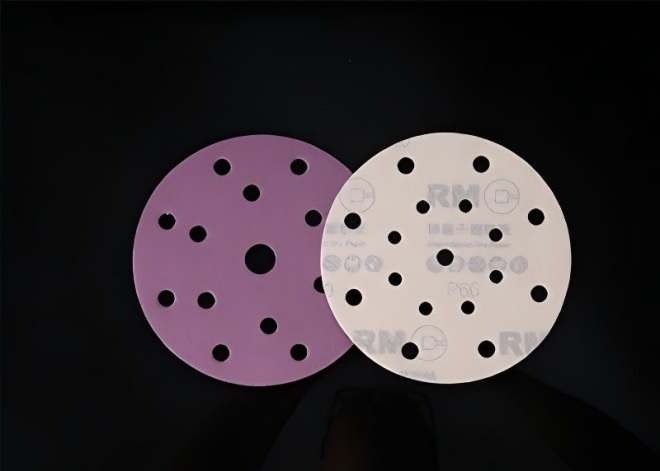
Toughness is often associated with durability, but a more durable grain is not automatically a more productive grain. For coated abrasives, the useful life of a grain depends on how well it can withstand working stress while still renewing its cutting surface when necessary.
Consider a demanding grinding application in which substantial pressure is applied to the abrasive. A grain with insufficient toughness may fracture too soon. The abrasive may appear aggressive initially, but the available cutting grain can be consumed quickly. This can shorten the period during which the abrasive delivers useful material removal.
At the other end of the spectrum, a very resistant grain may stay in place for a long time but gradually lose its cutting efficiency. The operator may compensate by applying more pressure, increasing friction and heat without necessarily improving productivity.
The useful performance of ceramic abrasive grain lies in the balance between these behaviors. The grain should withstand the stresses associated with the application and still fracture in a controlled way when its cutting edge becomes less effective.
This is why abrasive life should not be judged simply by how long individual grains remain physically present. A coated abrasive that continues to remove material effectively and produces an acceptable finish over its working cycle can be more valuable than one whose grains remain intact but progressively lose their cutting ability.
Material removal and heat generation are closely connected to the condition of the abrasive cutting edge. A sharp grain can penetrate and remove material, whereas a worn grain tends to spend more time sliding against the workpiece. As the balance shifts from cutting toward rubbing, friction increases and more energy is converted into heat.
Grain geometry and fracture behavior can influence how quickly that transition occurs. When a ceramic abrasive grain is able to expose fresh cutting points during operation, it can continue to engage the workpiece more effectively instead of relying entirely on worn surfaces.
This matters in applications where excessive heat is undesirable. Certain metals and surface treatments can be sensitive to thermal input, while high temperatures can also affect the consistency of the grinding process. When an abrasive becomes dull, simply increasing pressure is not always a good solution because additional force can increase both friction and heat.
For this reason, cutting speed at the start of an operation is only one part of abrasive performance. A more useful evaluation looks at how the abrasive behaves throughout the process: how quickly it removes material, how consistently it cuts, how much pressure is required, and how its performance changes as the grain wears.
The abrasive construction itself also matters. Grain properties interact with backing stiffness, resin formulation, coating density, and the distribution of abrasive particles. The final performance of a ceramic abrasive grain should therefore be considered within the complete coated abrasive rather than separated from the rest of the product.
| Grain Property | Effect on Abrasive Behavior | Performance Implication |
|---|---|---|
| Internal structure | Controls the grain's response to mechanical stress | Influences cutting stability and fracture behavior |
| Shape and geometry | Determines how the grain contacts and penetrates the workpiece | Affects cutting efficiency and material removal |
| Microfracturing | Exposes fresh areas of the grain during use | Helps maintain effective cutting edges |
| Toughness | Determines resistance to mechanical breakdown | Needs to be balanced with controlled fracture |
| Fracture behavior | Influences how quickly worn cutting points are renewed | Affects the balance between cutting consistency and abrasive life |
| Cutting efficiency | Determines the proportion of energy used for material removal | Can influence productivity, pressure requirements, and heat generation |
There is no universal grain specification that will deliver the best result in every coated abrasive. The requirements change considerably between heavy metal grinding, precision finishing, wood sanding, and other industrial applications.
For demanding metalworking, the abrasive may be exposed to high pressure and significant impact. In this environment, the grain needs enough toughness to remain effective under load while retaining suitable fracture behavior. Applications such as weld removal, stainless steel grinding, edge preparation, and heavy stock removal can place particularly high demands on grain performance.
Woodworking requires a somewhat different balance. When sanding solid wood, engineered wood, or other wood-based materials, excessive aggressiveness is not necessarily desirable. A wood grain ceramic abrasive needs to provide useful material removal while allowing the manufacturer to maintain the surface quality and sanding characteristics expected from the finished product.
Finishing applications shift the priority again. Instead of maximizing stock removal, the goal may be a stable cutting action and predictable surface result. In these cases, grain fracture characteristics, geometry, and grit selection need to be considered together rather than assuming that the most aggressive ceramic grain will automatically produce the best result.
The abrasive format also influences the choice. A flexible sanding belt, for example, places different demands on grain and backing interaction than a rigid grinding disc. Operating speed, contact pressure, workpiece hardness, and the desired finish all contribute to the final selection.
For manufacturers comparing options for different coated abrasive constructions, reviewing the available abrasive products from Riken can provide a starting point for understanding the material solutions available for different applications. When the required performance depends on a particular workpiece, abrasive formulation, or production condition, a more specific discussion is often useful. Manufacturers can contact Riken's technical team with their application requirements and discuss which ceramic abrasive grain characteristics are most appropriate.
In practice, grain selection works best when it starts with the application rather than with a single material specification. Once the required cutting behavior, abrasive life, surface quality, and operating conditions are clear, grain structure and fracture characteristics can be evaluated against those requirements.
The cutting performance of a coated abrasive is closely tied to what happens at the grain level. Grain structure determines how particles respond to working stress, while geometry affects how effectively they penetrate the workpiece. Toughness controls resistance to breakdown, and controlled microfracturing can help replace worn cutting points with fresh ones during operation.
For demanding coated abrasive applications, ceramic abrasive grain can offer a useful combination of cutting efficiency and controlled wear when its properties are properly matched to the abrasive construction. In woodworking, wood grain ceramic can be considered when manufacturers need ceramic grain performance for sanding wood and wood-based materials while maintaining appropriate control over material removal.
The most effective selection is rarely based on grit size or initial cutting speed alone. Looking at grain structure, shape, toughness, fracture behavior, workpiece characteristics, operating pressure, and abrasive construction together gives manufacturers a much clearer basis for developing coated abrasives that remain productive throughout their intended service life.
Ceramic abrasive grain is an engineered abrasive material designed to provide effective cutting and controlled fracture during grinding or sanding. Its structure can help maintain useful cutting edges as the abrasive wears.
Grain structure determines how an abrasive particle responds to pressure and mechanical stress. It influences fracture behavior, cutting consistency, and the useful life of the abrasive.
Controlled microfracturing allows small portions of a worn grain to break away, exposing fresh cutting points. This can help the abrasive maintain cutting performance during continued use.
No. Excessive toughness can prevent worn cutting edges from fracturing effectively. Useful abrasive life depends on the balance between mechanical strength and controlled fracture.
Wood grain ceramic is used in coated abrasive applications involving wood and wood-based materials where efficient sanding and controlled cutting behavior are required.
Manufacturers should consider the workpiece, required material removal, operating pressure and speed, surface finish, heat sensitivity, abrasive construction, and expected service life before selecting a grain.

 English
 中文
 한국어
 français
 Deutsch
 Español
 italiano
 русский
 português
 العربية
 tiếng việt
 Polska